




Swing Drives
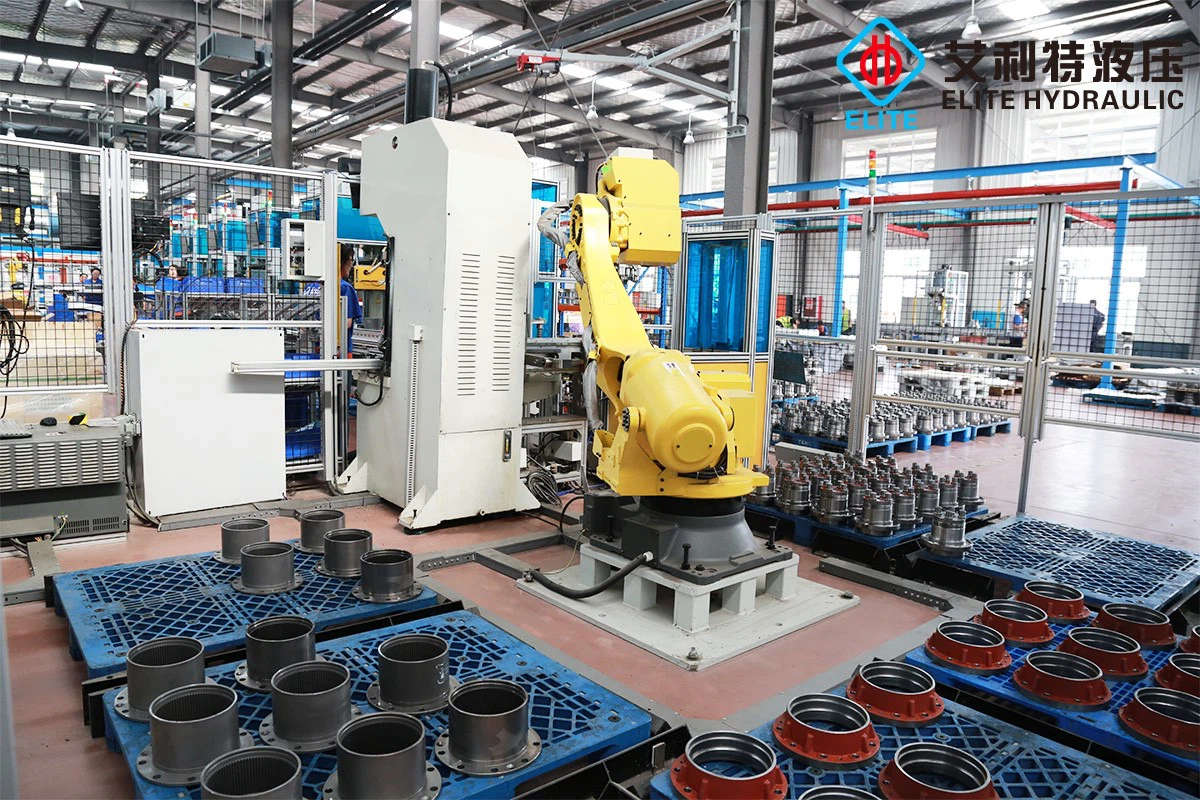
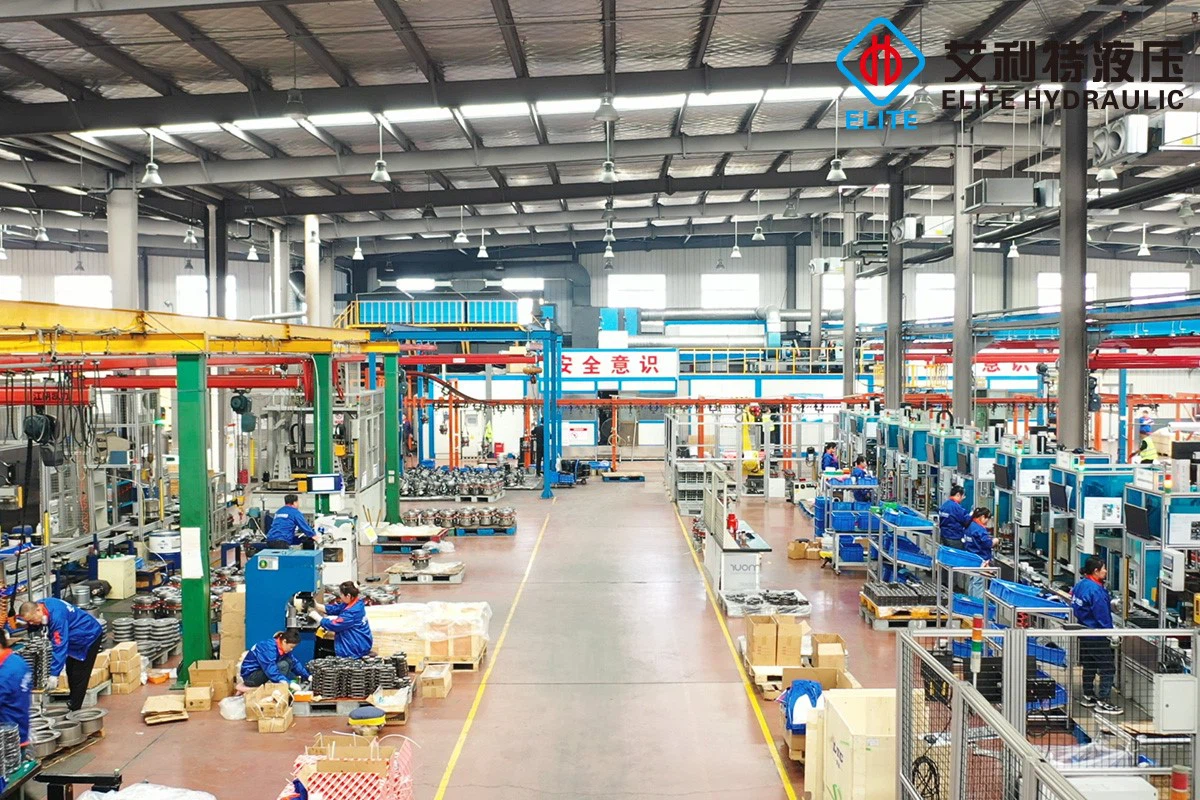
Qingdao Elite Hydraulic Co.,Ltd was founded in 2004 . Starting from the production of power transmission component parts for European and American customers.we have evolved into an established drivetrain manufacturer.providing product solution for modern powertrains of mechanical, hydrostatic, or electrically driven designs.
We manufacture and supply high quality travel drives,slewing drives,winch drives,cutter drives,transit mixer drives,twin shaft mixer drives ,pump drives,multiple disc brake,axle,machine tools spindle gearbox,and custom drivetrain systerms for both on and off highway markets and finding application in agriculture, forestry,construction,mining,concrete, AWP,airport ,marine & offshore,wind,machine Tools and special vehicles.
Why Choose Us
Professional Team
We have a strong R&D team,and we can develop and produce products according to the drawings or samples the customers offered.
Advanced Equipment
We have our own testing lab and the most advanced and complete inspection equipment,which can ensure the quality of the products.
Rich Experience
We focus on developing high-quality products for top-end markets.Our products are in line with international standards,and are mainly exported to Europe, America, and other destinations around the world.
Certificate
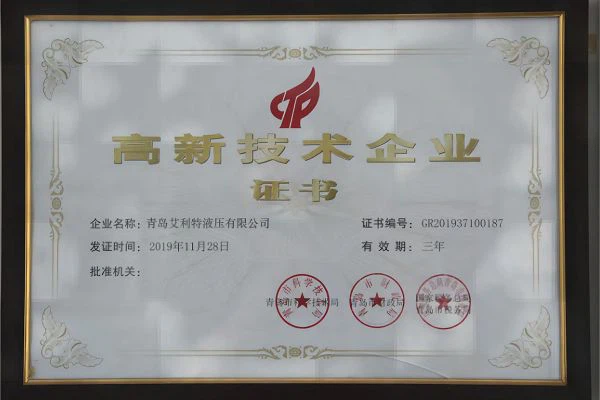
Our company has a complete organizational structure and quality management system, and has successively passed three major system certifications: ISO9001,IATF16949, and ISO14001.

Our Small Final Drives are engineered to deliver exceptional performance in compact and demanding applications.

Our Small Final Drives are engineered to deliver exceptional performance in compact and demanding applications.
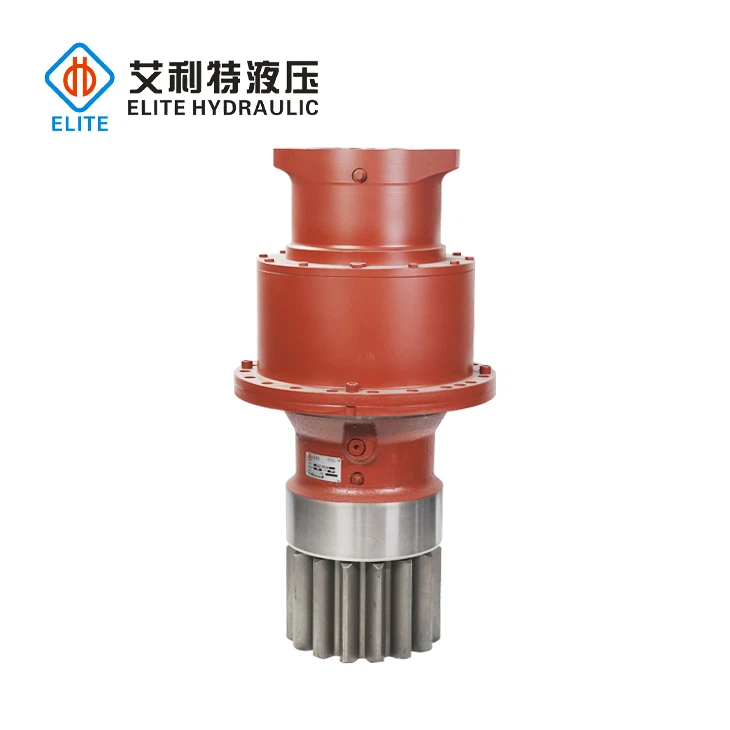
Our Small Final Drives are engineered to deliver exceptional performance in compact and demanding applications.

Our Small Final Drives are engineered to deliver exceptional performance in compact and demanding applications.
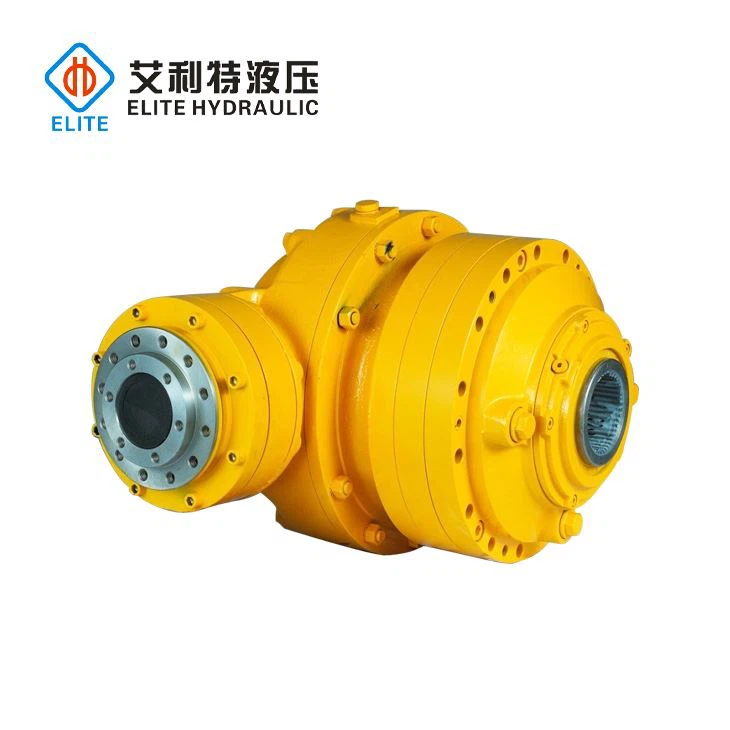
Twin Shaft Planetary Gearboxes
Our Small Final Drives are engineered to deliver exceptional performance in compact and demanding applications.

Cutter Drives for Cold Milling Machine
Our Small Final Drives are engineered to deliver exceptional performance in compact and demanding applications.

Twin Shaft Mixer Special Gearbox
Our Small Final Drives are engineered to deliver exceptional performance in compact and demanding applications.
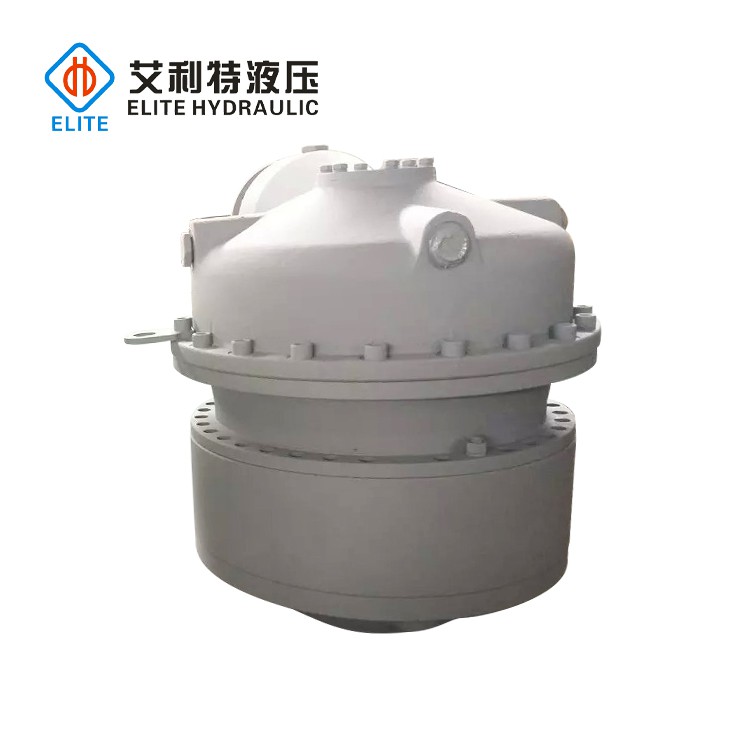
Twin Shaft Concrete Mixer Gearbox
Our Small Final Drives are engineered to deliver exceptional performance in compact and demanding applications.

Our Small Final Drives are engineered to deliver exceptional performance in compact and demanding applications.
What is Swing Drives?
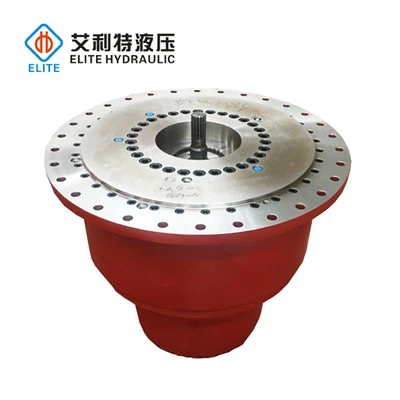
The standard Swing Drives utilize integral pinion gears with a bearing-nut shaft retention device to provide reliable shaft retention and precise bearing preload. All Swing Drives are also built with high-capacity tapered roller bearings. We offer several Model sizes with a variety of pinion configurations and multiple hub/flange mounting configurations.
Every time an excavator operator spins the house of their machine, grabs a bucket of dirt, and turns back to fill a waiting truck, there's a swing drive swiveling along a slewing ring to make it all happen. All that work also means the gears, shafts, and bearings of a swing drive are subject to quick starts and stops, friction, and constant wear which limits the working life of every swing drive.
High Torque Capacity
Swing drives can deliver high torque in a compact package, which is essential for applications with heavy lifting or tight space constraints.
Precise Positioning
They provide accurate control over angular position, which is crucial for tasks that require precise movement, such as crane operations or robotic arms.
Backlash-Free Operation
Swing drives are often designed to minimize backlash, which is the unwanted looseness or play between mating parts. This is particularly important in applications where maintaining tension or preventing reverse movement is necessary.
Efficient Power Transmission
These drives offer high efficiency, meaning that most of the input power is converted into useful work, reducing energy losses and improving overall system performance.
Reliability
Swing drives are built to withstand harsh environments and demanding applications, leading to a longer service life and reduced need for replacement.
The end effect of the swing drive is (simply put) to allow the upper components of the excavator to swing, but the overall design must also ensure the swinging motion is smooth, operates under defined guidelines, and is able to be finely controlled by a well-trained operator.
The internal hydraulic components and design of swing drives implement a number of valves, ports, and bearings to allow an operator to control the speed and direction of the motor while also including safety measures to prevent damage to the machine. Since both the machine's components being moved are robust and a load is often added on, the swing motor must be designed to control for changes in momentum, operating on uneven ground, and consistent high-impact connections between parts.
By opening and closing hydraulic ports inside the swing drive (through a joystick in the cab) the operator is able to control the speed and direction of internal components and, in turn, the movement and position of all the upper parts of the excavator.
At the bottom of a swing gear the teeth of a pinion gear connect to the teeth of a slewing gear in the excavators carbody -- as the pinion gear rotates the upper components of the excavator revolve around the inside of the static slewing gear.
Types of Swing Drives
Swing drives offer a myriad of sizes, capacities, and mounting features to fulfill a multitude of functions. Standard models have dual-axis drives turning simultaneously, or two drives positioned on the same axis. The two-drive setup allows two worm threads to drive a ring gear along one axis.
Emerging technologies led to an increase in popularity of the hourglass design in slew drive manufacturing. The new design offers superior performance by employing multiple gear teeth at the same time. Swing drives, designed to handle heavier loads, utilize double-row slew bearings instead of single-row bearings.
With a specialized application in solar tracking systems, slewing drives assist in generating a higher solar power output. This is achieved by facilitating equipment mobility with a focus on the sun. Custom solutions are made for applications requiring exceptional load capacity utilizing dynamic and static torque.

Application of Swing Drives
Metal cutting and forming
These applications need full precision in positioning the workpieces. Swing Drivess with a reduced backlash option deliver high accuracy results under varying conditions.Swing Drivess
Mining
Swing drives mechanisms are ideal for applications demanding a maximum torque capacity along with shock loading resistance. They also offer ratio reduction and present a profile low enough to support an extensive selection of mining equipment.
Construction
Swing drivess operate with systems providing power to construction equipment that is subject to heavy loads of variable operation. They are appropriate for this field due to the ability to produce high torque and smooth operation in limited spaces. Crowded construction areas are typical with equipment such as winches, hoists, and cranes.
Printing
Printing press rolls keep precision print registration at top speeds. A Swing Drives supports rapid changes in the operating speed. Compact drives with low inertia perform better where rapid starting and stopping is necessary than devices with heavier gearing featuring multiple stages.
How to Reassemble a Swing Drive:
●Seals are pressed into the retainer plate with a hydraulic press.
●The technician slides the retainer plate onto the pinion shaft.
●The bearing is stacked onto the pinion shaft.
●The technician uses an overhead crane and forklift to bring the swing drive to a hydraulic press to fully compress the bearing onto the shaft.
●The hydraulic press exerts a uniform pressure onto the bearing to press the bearing onto the shaft and seat it next to the retainer plate.
●The technician adds thrust washers to the gears and inserts the gears into the planetary carrier.
●Planetary pins are pushed into the gears.
●The technician builds a second planetary carrier starting with the thrust washers.
●Bearings are lubricated and then placed into the planetary carrier against the thrust washers.
●Gears are slid onto each of the bearings and then lubricated, followed by thrust washers.
●Retaining rings are clipped onto the shafts and hold the bearings, gears, and washers in place.
●The sun gear is inlaid into the center of the planetary and the planetary is now complete.
●The outer housing is lowered over the pinion shaft and the retainer plate is bolted to the housing.
●The housing is heated in a parts oven to gently expand it and then the planetary carrier is lowered into the housing.
●Once fully lowered into the housing, the planetary carrier is bolted into place.
●The second planetary is added to the swing drive.
●A seal is added to the housing.
●The second half of the housing is placed onto the swing drive and bolted into place. This completes the rebuild process of the swing drive.
●The swing drive is primed and painted.
How Slewing Drives Work
Slewing drives depend on worm gear technology, whereby a horizontally mounted worm acts as a driver for the gear. As the horizontal screw rotates, it turns the gear around the axis oriented perpendicularly to the screw axis. As a result, the gear speed is reduced while the torque is multiplied proportionately. The number of worm threads and gear teeth determine the applicable speed ratio.
The hourglass mechanism resembles the traditional worm gear technology and offers an improvement in gear functionality. Instead of relying on a single point of contact as with traditional models, the hourglass worm profile allows up to 11 gear teeth to make contact with the worm shaft. The ability to engage multiple teeth at once makes hourglass slewing drives durable, stronger, and more efficient.
What are the parts of a swing drive?
Swing Motor
The upper part of the swing drive is a hydraulic swing motor that consists of a number of valves, ports, and bearings that control how and when hydraulic fluid flows and powers the attached gearbox. Safety mechanisms inside the motor must account for feedback from the machine and be designed to work under intense pressure.
Swing Gearbox
The swing gearbox consists of a number of planetary gear systems, each designed to convert energy from high speed input into lower speed, high torque output. High torque power is necessary to swing the weight of the house, along with any load, and ensure movement is fluid and the machine performs properly on the job.
Planetary Gear System
A planetary gear system consists of multiple planet gears orbiting a central sun gear. Through gear reduction power is transferred into high torque output.
Pinion Gear Shaft
The pinion gear shaft extends from the bottom of the swing drive and interacts directly with the slewing gear in the carbody of the excavator. The interaction of the teeth on the pinion and the teeth in the slewing gear rotates the swing motor and, in turn, swings the excavator's house.
Slewing Gear / Slewing Ring
While not a part of the swing drive, the slewing gear is the component attached to the excavator's undercarriage that contains the swing drive, directs its path, and facilitates its swinging of the house.
How should the rotary drive be maintained?
Check the gap
When the rotary drive device is running, the teeth between the internal worm and the gears rub against each other, which will cause wear and tear, resulting in a rotational gap between the worm and the worm gear. If the gap is too large, it will pose a safety threat. Therefore, it is necessary to inspect it during use, and the inspection frequency is generally carried out after 700 hours of operation or once every 6 months.
Check the mounting bolts
Some equipment will experience strong vibrations during operation, which will cause the mounting bolts of the rotary drive to loosen. Therefore, after running for a period of time, the bolts should be re-tightened to the specified torque. Frequency of inspection should be every 700 hours of operation or at least every 6 months. The inspection cycle should be shortened under special operating conditions. All bolts, nuts, and washers should be replaced with new ones if they are loose.
Check the tilt clearance
After long-term operation of the slewing bearing inside the slewing drive, the raceways will wear, resulting in an increase in the tilt clearance. The slewing drive should therefore be inspected after 700 operating hours or every 6 months.
Lubrication frequency and oil injection amount of rotary drive
For relubrication of the worm gear, grease needs to be injected into all grease fittings while the rotary drive unit is rotating to ensure that the old grease can flow freely from the unit.
Check the seals
During maintenance work on the rotary drive, it is also important to check the seals. If the seal is damaged, debris and water vapor will enter the inside of the rotary drive device, causing unstable operation of the rotary drive or direct damage. Damaged seals must therefore be replaced.
Qingdao Elite Hydraulic Co.,Ltd was founded in 2004 . Starting from the production of power transmission component parts for European and American customers.we have evolved into an established drivetrain manufacturer.providing product solution for modern powertrains of mechanical, hydrostatic, or electrically driven designs.
Certificates
Our company has a complete organizational structure and quality management system, and has successively passed three major system certifications: ISO9001,IATF16949, and ISO14001.



FAQ
Hot Tags: swing drives, China swing drives manufacturers, suppliers, factory
Previous
Slew Planetary GearboxNext
Swing DrivesYou Might Also Like


Send Inquiry